 By
Ekaterina Pisano
By
Ekaterina Pisano
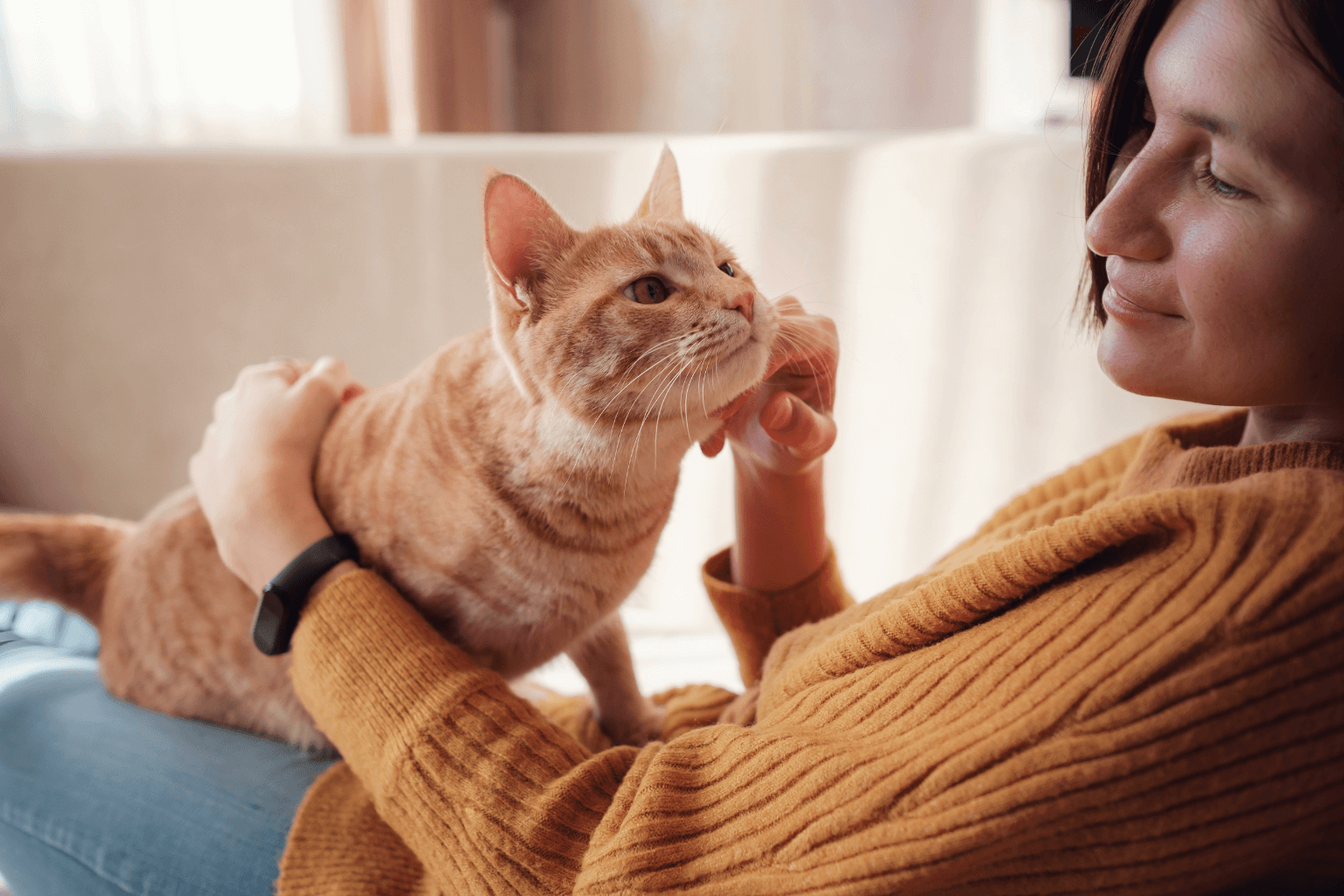
You know that sound — that soft, rhythmic rumbling that turns your cat into a fuzzy little motorcycle idling on your lap. That gentle vibration that seems to say “all is right in my kingdom” while simultaneously putting you into a trance-like state of relaxation. We call it purring, and if you’ve ever wondered why cats have this seemingly magical ability while dogs are out here just wagging their tails like amateurs, buckle up.
The truth is way more fascinating (and weird) than you think.
Let’s start by destroying the most common assumption: cats don’t just purr when they’re happy.
I know, I know — your entire understanding of feline communication just got flipped upside down. But here’s the thing: purring is more like a Swiss Army knife of cat vocalizations than a simple “I’m content” signal.
Yes, cats absolutely purr when they’re blissed out — curled up in a sunbeam, getting chin scratches, or kneading your stomach at 3 AM like they’re making the world’s most uncomfortable bread.
But they also purr when they’re stressed, scared, in pain, giving birth, or even dying. It’s like if humans smiled during job interviews, weddings, AND root canals. Confusing? Absolutely. But there’s method to this madness.
Here’s where things get wild: scientists believe purring might actually be a built-in healing mechanism. No, seriously — we’re talking potential medical-grade vibrations coming from your fluffy little roommate.
Research has shown that the frequency of a cat’s purr (typically between 25-150 Hertz, with a sweet spot around 25-50 Hz) falls within a range that can promote healing and reduce pain. These specific vibrations have been linked to:
That's right, your cat might be conducting physical therapy on themselves while napping. The vibrations may help strengthen bones and prevent osteoporosis. Cats have significantly lower rates of bone and joint disorders compared to dogs, and some researchers think purring is the secret weapon.
The same frequency range has been shown to promote tissue repair and reduce swelling. It's like your cat has a built-in ultrasound machine running 24/7.
Those vibrations might trigger the release of endorphins, nature's painkillers. So when your cat is purring after surgery or an injury, they're not necessarily feeling great—they're actively trying to feel better.
For both the cat AND you. Studies have shown that the act of petting a purring cat can lower human blood pressure and reduce anxiety. We're basically getting free therapy from vibrating furballs.
Think of it this way: cats purr at stressed moments (vet visits, scary situations) possibly because they’re self-soothing, the same way humans might take deep breaths or listen to calming music. Except cats evolved their own personal vibration spa that goes wherever they go. Overachievers.
Now for the mechanical mystery that stumped scientists for decades: how exactly do cats create this sound?
For years, researchers debated whether it came from blood flow, the larynx, or some magical cat dimension we couldn’t comprehend. The current leading theory? It’s all in the larynx (voice box), but not in the way you’d think.
Cats have specialized laryngeal muscles that twitch at a rate of 25-150 times per second, causing the glottis (the opening between the vocal cords) to rapidly open and close. When your cat breathes in and out with these rapid muscle contractions happening, it creates that distinctive purring sound. It’s like they’ve got a tiny motor installed in their throat that runs on pure feline smugness.
The really impressive part? Cats can purr continuously for minutes or even hours without stopping, maintaining it through both inhaling and exhaling. Try humming while breathing in—it’s way harder than it sounds. Cats are basically doing advanced vocal acrobatics while looking like they’re not even trying.
Beyond self-healing, purring is definitely a communication tool, but it’s more nuanced than “happy = purr, sad = no purr.”
Newborn kittens are born blind and deaf, but they can purr and feel vibrations by the time they're a few days old. This lets them signal to mom "hey, I'm here and I'm okay" while nursing, and helps mom locate her babies. It's like a homing beacon made of cute.
Some researchers have identified a specific type of purr that cats use when they want something from you — usually food. This "solicitation purr" has a higher-frequency component (around 220-520 Hz) embedded within the regular purr. To human ears, it sounds slightly more urgent and, frankly, more annoying. That's because this frequency range is similar to a human baby's cry, which our brains are hardwired to respond to. Your cat is literally exploiting your parental instincts to get breakfast. Diabolical.
Cats often purr around other cats they're comfortable with, and around humans they trust. It's a way of saying "I consider you safe" or "we're cool, no need for drama here." When your cat curls up next to you and starts purring, they're not just relaxing — they're reinforcing your bond.
Here’s a fun fact that’ll blow your mind: big cats (lions, tigers, leopards, jaguars) can’t purr the way domestic cats do. They can make a purr-like sound while exhaling, but they can’t maintain it continuously through both inhaling and exhaling like house cats can.
The trade-off? Big cats can roar, which domestic cats cannot do. It comes down to anatomy — specifically the hyoid bone in the throat. Cats that can purr have a fully ossified (hardened) hyoid bone, while cats that can roar have a flexible, partially cartilaginous hyoid. You get one or the other, not both.
So basically, your tabby cat sitting on your lap has a superpower that a lion doesn’t. Let that sink in. Your cat literally chose healing vibrations over intimidating roars, and honestly, that tracks with the whole “I’ll just manipulate you with cuteness” survival strategy they’ve perfected.
The exception to this rule? Cheetahs and cougars can purr continuously like domestic cats. They’re like the cool cousins who didn’t go the roaring route and stuck with the vibration game instead.
Now that we’ve established purring isn’t always sunshine and happiness, here’s when you should actually worry about your cat’s purr:
So why do cats purr? The honest answer is: for a bunch of reasons, and we’re still figuring them all out. It’s a self-healing mechanism, a communication tool, a stress-reliever, a bonding behavior, and possibly a way to manipulate humans into thinking they’re always content even when they’re secretly plotting world domination.
What we do know for sure is that purring is a remarkable evolutionary adaptation that’s unique to cats and incredibly effective. Whether your cat is purring because they’re happy, healing, or hungry, those vibrations are doing something beneficial—for them and for you.
Next time your cat fires up their internal motor and settles onto your lap, remember: you’re not just experiencing a cute moment. You’re participating in an ancient feline mechanism that promotes healing, reduces stress, and reinforces one of the most successful interspecies relationships in history. Your cat is literally vibrating at frequencies that make both of you feel better.
And honestly? In a world full of chaos, having a warm, purring cat on your lap might be one of the most therapeutic things available. No prescription needed, just a cat who’s decided you’re worthy of their motorized affection.
The science is cool, but the snuggles are better. That’s the real conclusion here.
Subscribe now and get exclusive updates — we’ll let you know the moment The Purrfect Cat Manual is released.