

 By
Ekaterina Pisano
By
Ekaterina Pisano


Remember those awkward teenage years—voice cracks, bad decisions, big feelings?
Yep. Your cat goes through that too… except with louder screaming, stronger smells, and a shocking amount of drama.
Welcome to kitty puberty. Let’s talk about what happens, when it happens, and whether neutering or spaying is the right move for your cat (and your sanity).
Cats don’t ease into adulthood. They explode into it.
Hormones kick in, instincts wake up, and suddenly your sweet baby turns into a tiny soap opera star. Understanding this phase helps you make the best decision—before your couch, sleep schedule, or nerves suffer.
Around 5–6 months old, male kittens hit puberty—and wow, do they announce it.
Your once-snuggly boy may suddenly:
💡 Important note:
Male cats don’t have a breeding season. They’re hormonally “on” all year long, which makes living with an intact male especially challenging indoors.
Female cats usually enter puberty between 6–12 months, sometimes earlier in warm climates or indoor homes with lots of artificial light.
When a female goes into heat, you’ll notice:
Heat isn’t painful—but it is stressful, frustrating, and exhausting for both cat and human.
Short answer? Yes.
Long answer? Yes—and here’s why.
Spaying and neutering are widely recommended in the U.S. by veterinarians and animal welfare organizations for health, behavioral, and population-control reasons.
Myth: “Neutering causes urinary problems.”
Truth: Urethra size is genetic. Intact cats actually have more urinary issues due to hormonal stress.
Myth: “Fixed cats get fat and lazy.”
Truth: Weight comes from calories and activity—not surgery. Adjust food portions and playtime.
Myth: “The surgery is risky for young cats.”
Truth: Pediatric spay/neuter (8–12 weeks) is extremely safe and often has faster recovery.
Myth: “She should have one litter first.”
Truth: Zero health benefits. Spaying before the first heat drastically lowers mammary cancer risk.
Most vets recommend:
Males: before 5–6 months (before spraying starts)
Females: before the first heat cycle
Shelters often spay/neuter earlier—and the outcomes are excellent.
Many cities offer subsidized options—definitely check locally.
Yes, even if your cat “seems fine.”
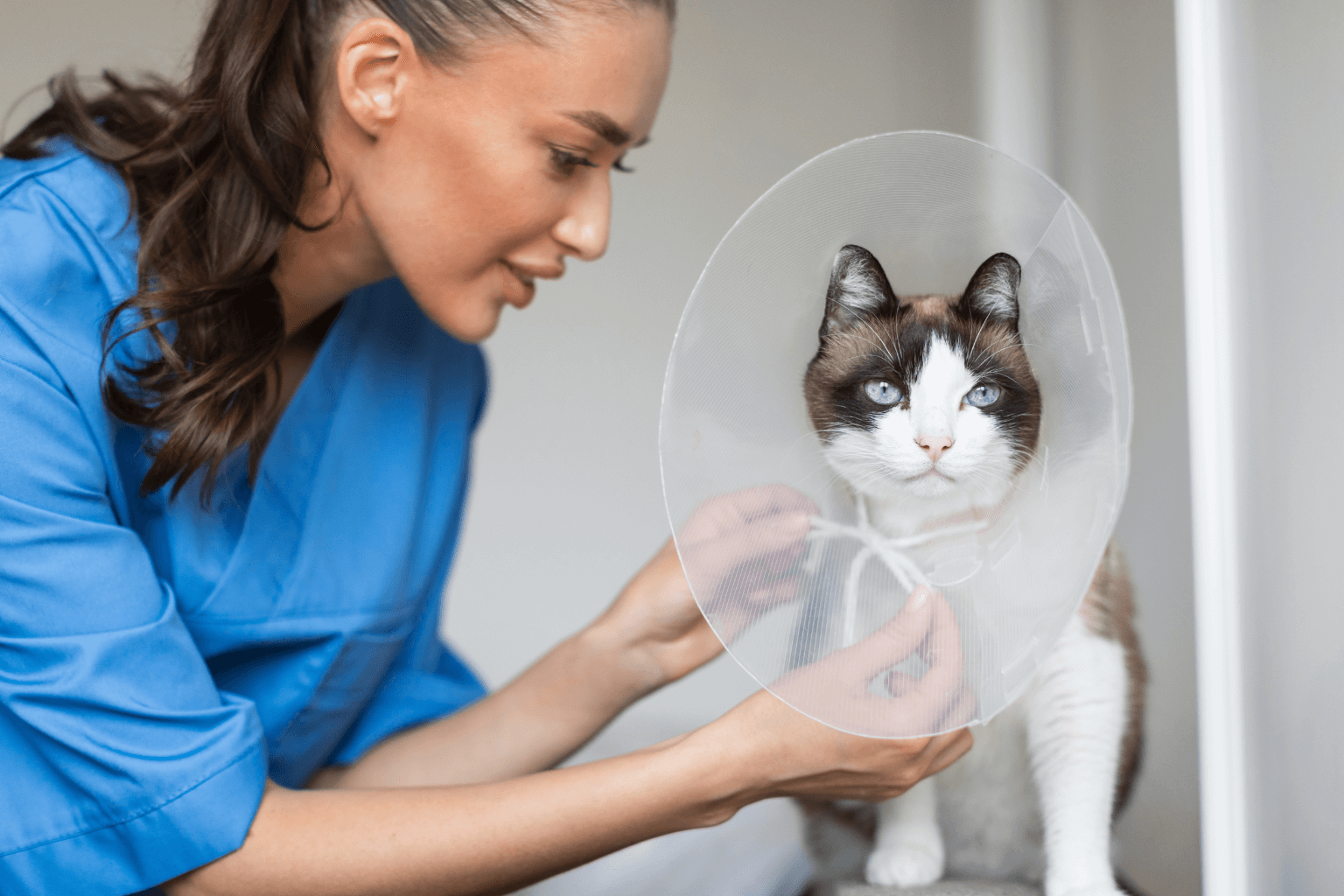
Alternatives like soft cones or recovery suits can work with vet approval.
Most males feel normal within 24 hours—but don’t be fooled.
Spaying is more invasive, so expect 5–7 days of careful management.
Trust your instincts—you know your cat best.
Spaying or neutering your cat is one of the kindest, smartest, and most responsible choices you can make.
It means:
Talk to your vet about the best timing for your cat—and check local resources if cost is a concern.
Your cat may never thank you out loud…
…but your couch, sleep schedule, and peace of mind definitely will.

Subscribe now and get exclusive updates — we’ll let you know the moment The Purrfect Cat Manual is released.